
Frank Talk
Life/Art, New York/Mabou

If you remember, I promised to write more about a talk I heard at AIPAD in New York City in April. Here it is.
The conversation, for which we lined up half an hour in advance to be sure of seating, put Clark Winter, photographer, in conversation with Gerhard Steidl, printer and publisher, about the work of Robert Frank, photographer. I know Frank’s work but not the others. I was kind of tagging along.
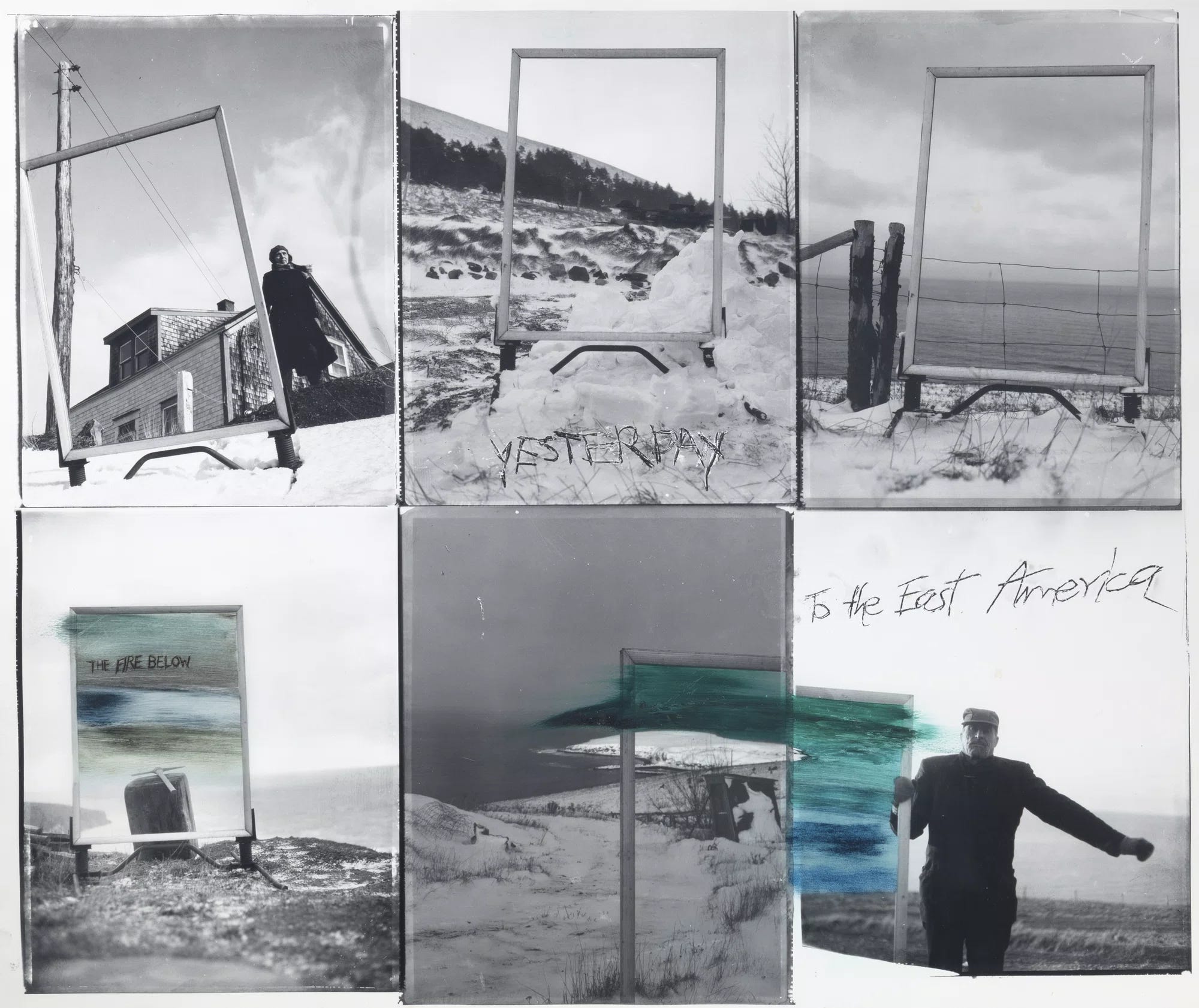
Both men spoke movingly about their last visits with Frank and his wife, the artist June Leaf1, at Mabou in Nova Scotia, where they had a home and made much of their art. The house in Mabou was very remote and basic. Steidl, who slept in the shed during chilly seasons, spoke of the wood stove that needed feeding every hour through the night to keep him warm. Frank and Leaf, who reached their nineties there, reveled in their simple sanctuary and found inspiration in the shapes and textures around them— like the frost lacing a window or a piece of driftwood. In the talk, Winter described Frank as a “sculptor with a camera,” whose project was “releasing the energy from inanimate objects.”
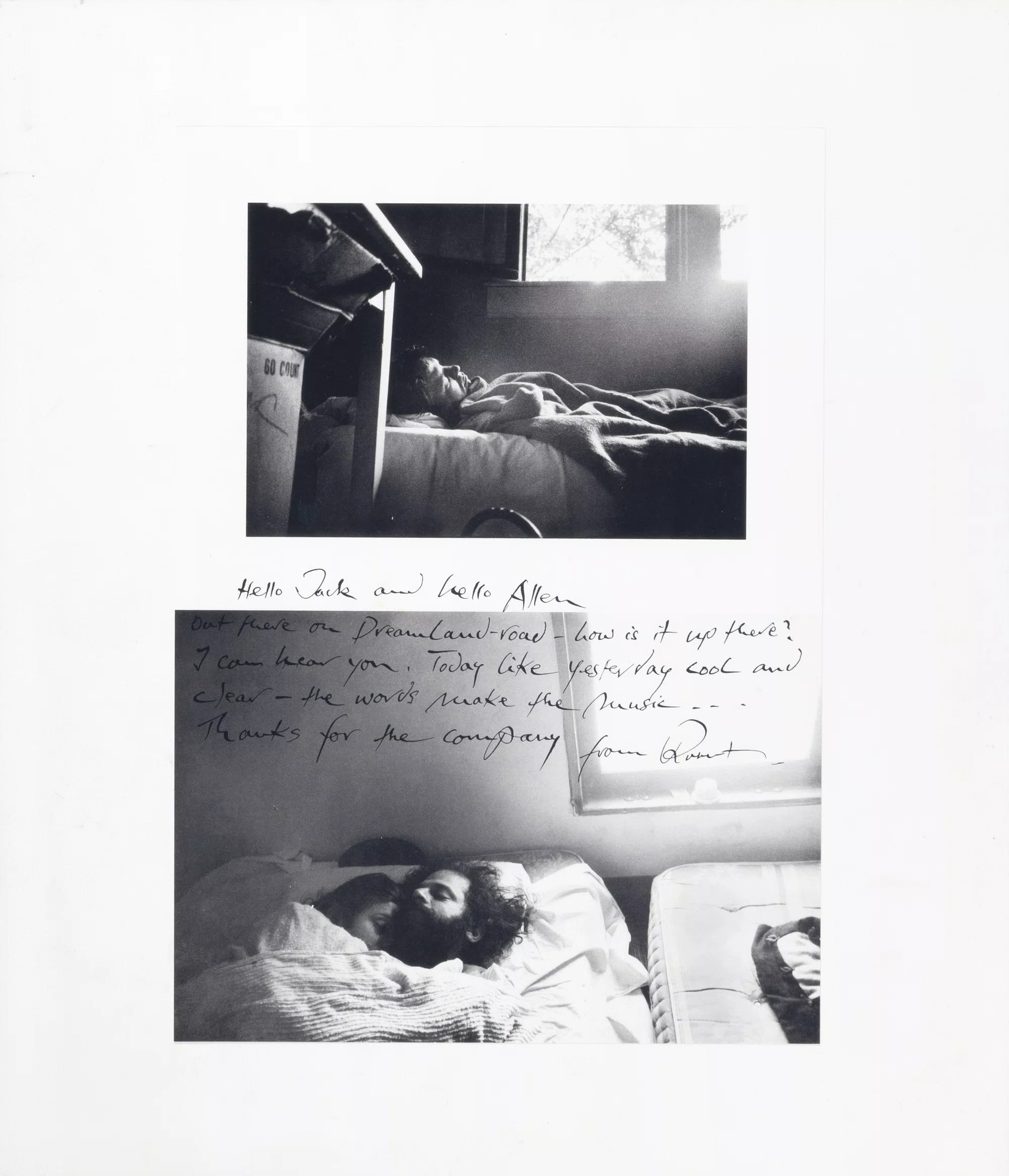
Steidl had been Frank’s go-to publisher since the 1980s. He visited the couple in Mabou every fall to curate and discuss an annual publication of collage-like works collected as Visual Diaries. One, called Household Inventory Record, includes old Polaroids refashioned with captions and juxtaposed with new work to document Frank’s life in Mabou. In the telling, the publishing process seemed intensely arduous and immersive. For days they did little but look at images and talk through layouts, fonts, trim size, inks, and paper stock. At Mabou, art was life, life was art.
But it was also seemingly true for Steidl. In a New Yorker profile he described working and living as “symbiosis.” He himself lives in a carefully curated, ritualistic way— on a street in Gottingen where he lives and works and puts people up in his own guesthouse, while managing every detail of books he prints one at a time. In the morning he drinks black tea from a silver teapot; in the afternoon, peppermint tea from a gold teapot. In other words, like Frank and Leaf, he seems to be a person who is extremely intentional about his choices. When Winters tried to steer Steidl toward reminiscing about how wonderful it was to work with Frank, Steidl replied dryly that the process was “like running through fire,” but ultimately worth it.
“Cheap, quick and dirty, that’s how I like it!”
In 2014 Frank and Steidl collaborated on a unique travelling retrospective. Steidl suggested minimizing costs and reaching people outside the art world by printing selections of Frank’s decades of work on newsprint and hanging them on the walls of colleges and university spaces all over the world. Frank wanted it to look “less artistic” and claimed that they images were “cheap, quick, and dirty, that’s how I like it!” Steidl recounted traveling with the paper scrolls in a suitcase from campus to campus and hanging them himself, directly on the walls, next to screenings of Frank’s films. The images were never for sale and remained outside of the art marketplace. After a few years of touring, the pop-up show had been seen by 300,000 people at 50 sites. When it was over, Steidl reported putting all the scrolls through the fireplace at Mabou for a “warm evening.”
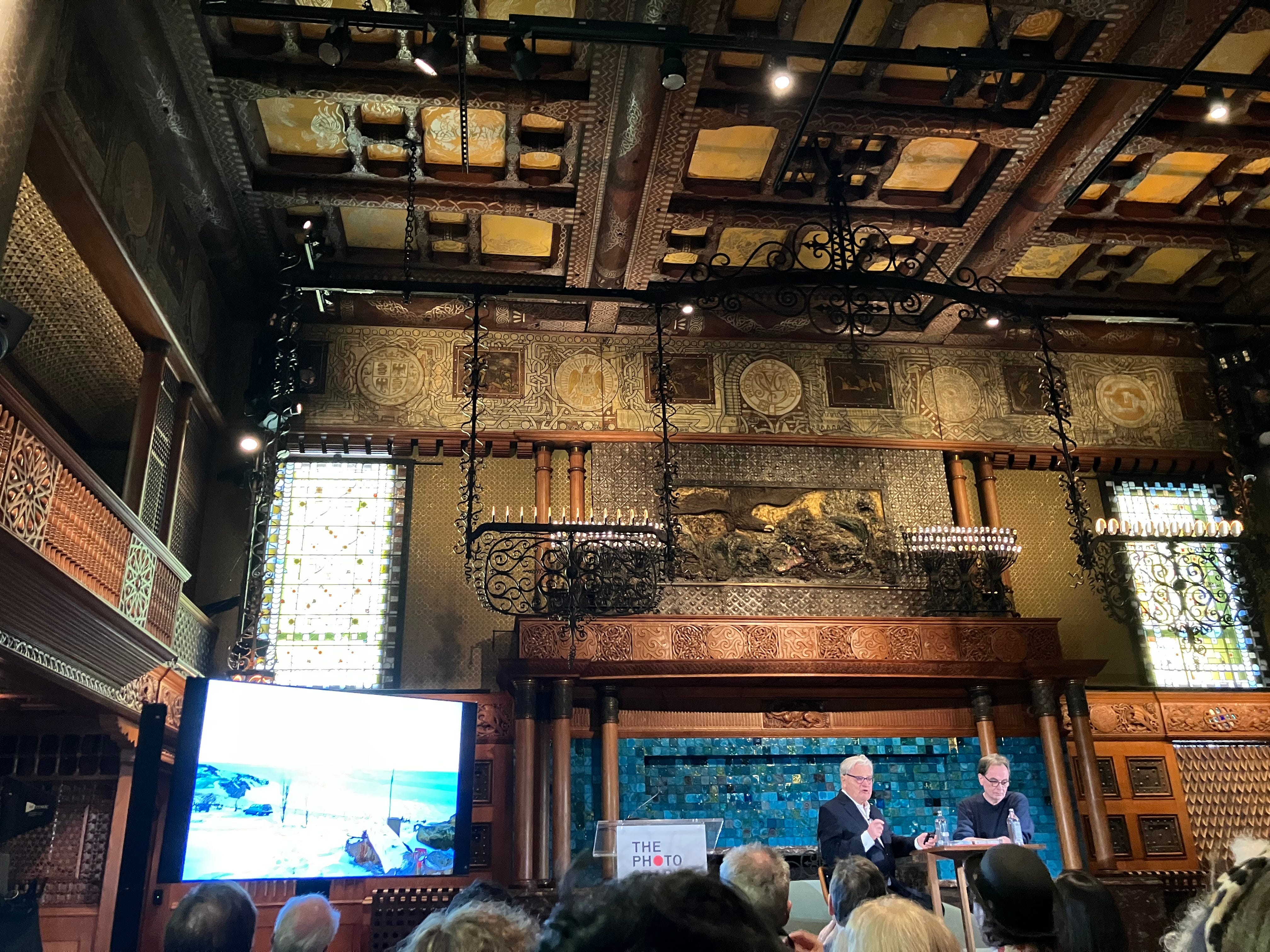
The humility and simplicity of that project struck me then and stuck with me— as well as the accounts of life/work at Mabou. Perhaps that was especially true because of the contrast with the talk’s setting in the Park Avenue Armory. The room was wood-paneled with mosaic tiles around a huge built-in fireplace. The ceiling was coffered. The windows were stained glass. The Armory is lovely, but the juxtaposition was telling. While waiting for the talk to begin, my husband and I watched the VIPs line up across the hall from us. They had paid extra to get in first, and were often cranky at having to wait at all. It was a New York moment. Was it really worth it, we wondered, to create this combative two-tiered experience when we were all there as fans of photography? We felt bad for the ushers enforcing this invisible velvet rope.
Why do some talks or shows or experiences stick with you? I try to track many of them here, but I’m not sure if they have a common denominator. Do you see patterns in your own sticky responses— are they emotional, aesthetic, intellectual? I think this one of mine was all of the above. Thoughts welcome, as usual, and thanks for being here, as always.
P.S. Having “teased” this post while I thought it, here is another post I will write soon. I spent yesterday in the Berg Collection of the New York Public Library exploring archival materials from Virginia Woolf’s extended family. I am interested in them from the other side, genealogically: Woolf’s mother was a niece and favorite subject of Julia Margaret Cameron, a photographer I wrote about. But regardless of their source, the tiny details of history enchant me. The embossed stationery, the turns of phrase, the handwritten bank ledgers…. all of it. To be continued, and to look forward to.
I don't know Robert Frank's work at all so this felt like walking in on the last five minutes of a full feature film - and it encourages me to go back and watch the whole thing some time!
This really spoke to me, especially the idea behind & inside Mabou -- the ability to find completeness in what is simple, most basic, and all around us, "like the frost lacing a window or a piece of driftwood." And to have designed an intentional space & style within which to live one's life.