
Madrid, New York
Doubling down at 5 museums in 2 countries over 2 months

As February turns to March it seems apropos to do a miscellany for this post, a catch up for a transitional time. Here in New York City, we got another huge pile up of snow this week, just as the last snow was disappearing. There was one fine, almost spring-like day, between winters. There’s a theme here of doubling down — as well as a tour, in art-historical order.
The Thyssen-Bornemisza Museum, Madrid
I spent a disproportionate amount of time at the Thyssen-Bornemisza Collection trying to figure out how one family accumulated such a vast collection of art so recently. Whereas the Prado Museum originated in a royal collection from 1600s, the Thyssen-Bornemisza Museum began in the mid-nineteenth century. And where did the money come from? Answer: Steel, the currency of twentieth-century skyscrapers and wars.
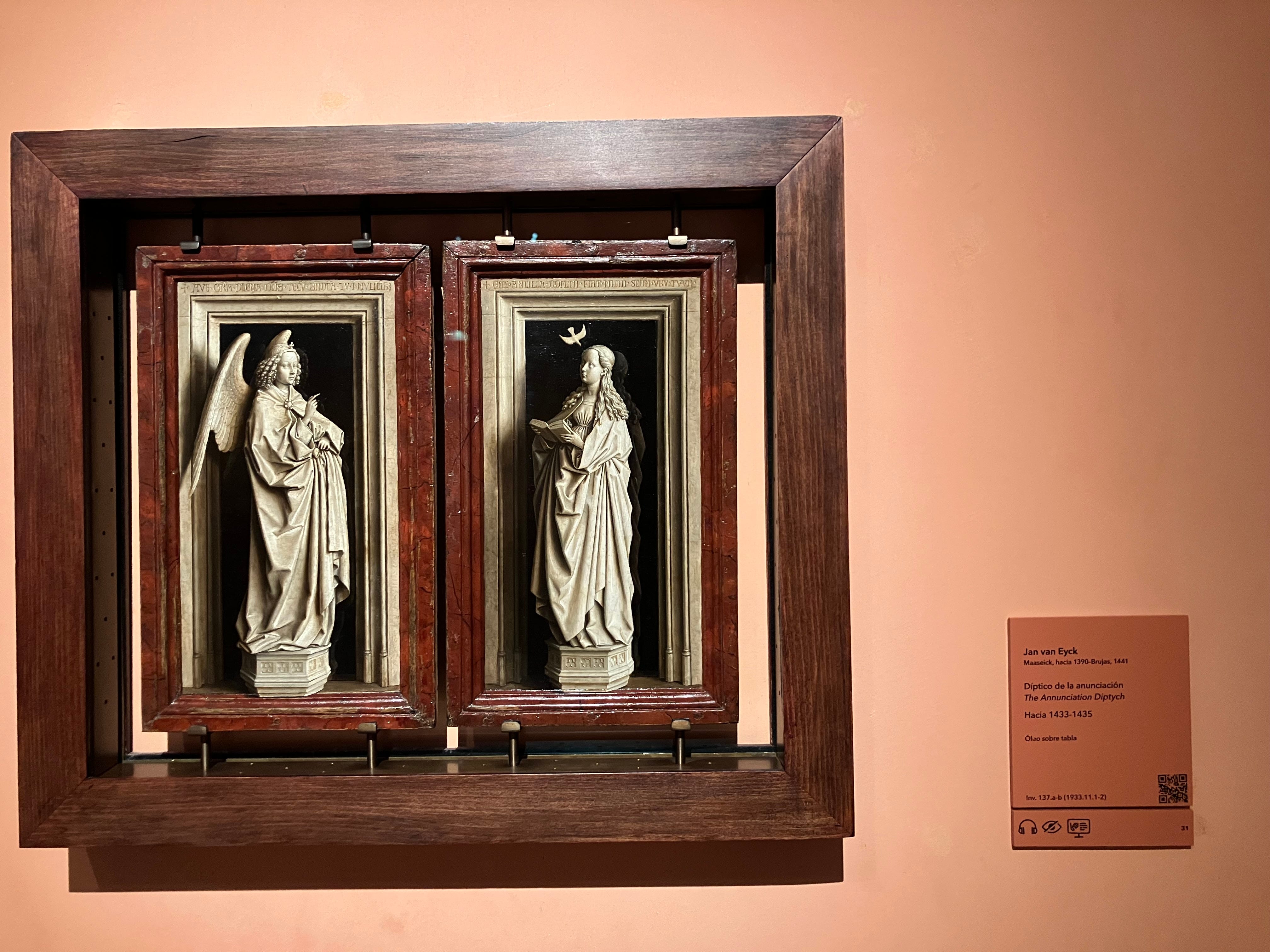
Despite my unease with this backstory, I loved much of what I saw there. One highlight was the works of grisaille, a trompe l’oeil technique where painters mimic other materials. Take a look at Jan Van Eyck’s diptych, below. Those delicate marble statues are painted, not sculpted! The inner wooden frames give a careful illusion of grain worn with age. The stone rectangles within the wooden frames are faux-carved with inscriptions from the Gospels. It’s an illusion within an illusion within another illusion. No photograph can do justice to the experience of standing before it, in wonder at the exquisite devotion and skill of its creation. It’s pretend, but it’s real.
The Prado Museum, Madrid
The first gallery my husband and I walked into stunned us. It was a huge room of history paintings and we stopped at the entrance, gaping. We looked at each other, then breathed again.
I don’t even like history paintings that much.


But you walk past those huge canvases— filling floor to ceiling with long-forgotten victories — to get to paintings like Goya’s 2nd and 3rd of May, 1808, a pair of history paintings in which something shifts. Seen side by side, the earlier painting, “The 2nd of May,” clearly fits the conventions of the genre. It’s got the heaving horses, the brawling masses, the dramatic swirl of bodies, larger than life. It’s enormously skillful.
But the later painting “The 3rd of May” suddenly attempts something very different. It’s personal. One man is singled out, almost in a spotlight during the nighttime execution scene. Another is bleeding in the foreground, his face turned toward us almost at eye level. These are not generic bodies carefully composed for highest drama, but individuals standing against an institutional array of power, those riflemen lined up with their backs to us.
The politics are complicated: Goya was a court painter; this was a government commission on the occasion of the restoration of the monarchy. But the paintings also celebrate the popular resistance to French invaders. They both represent moments in history, yes, but Goya has broken a mold in the latter. What a difference a day makes, you might think.
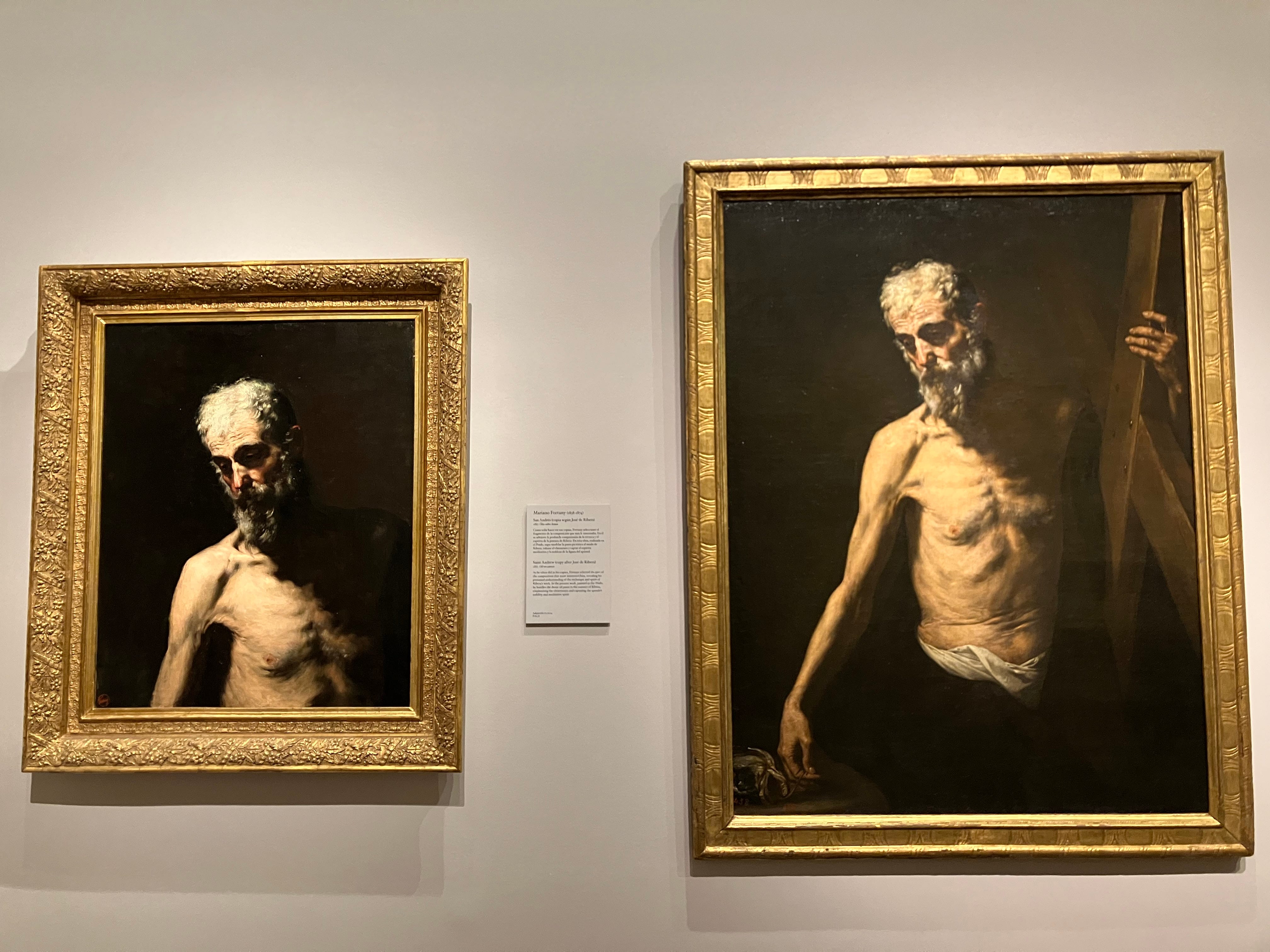
Throughout our visit to the museum (just one day!) we came across easels set up for artists in the midst of copying a painting. Some were set up in front of their subjects, on display next to an original. Some were folded and tucked away behind velvet ropes. In one case we saw an artist talking to visitors about his work, as he painted, right there. It felt delightfully old fashioned: copying Old Masters was part of any art education for hundreds of years. And museums have been schools for artists for as long, but we don’t necessarily see that in action any more. It was refreshing.
The Brooklyn Museum, New York
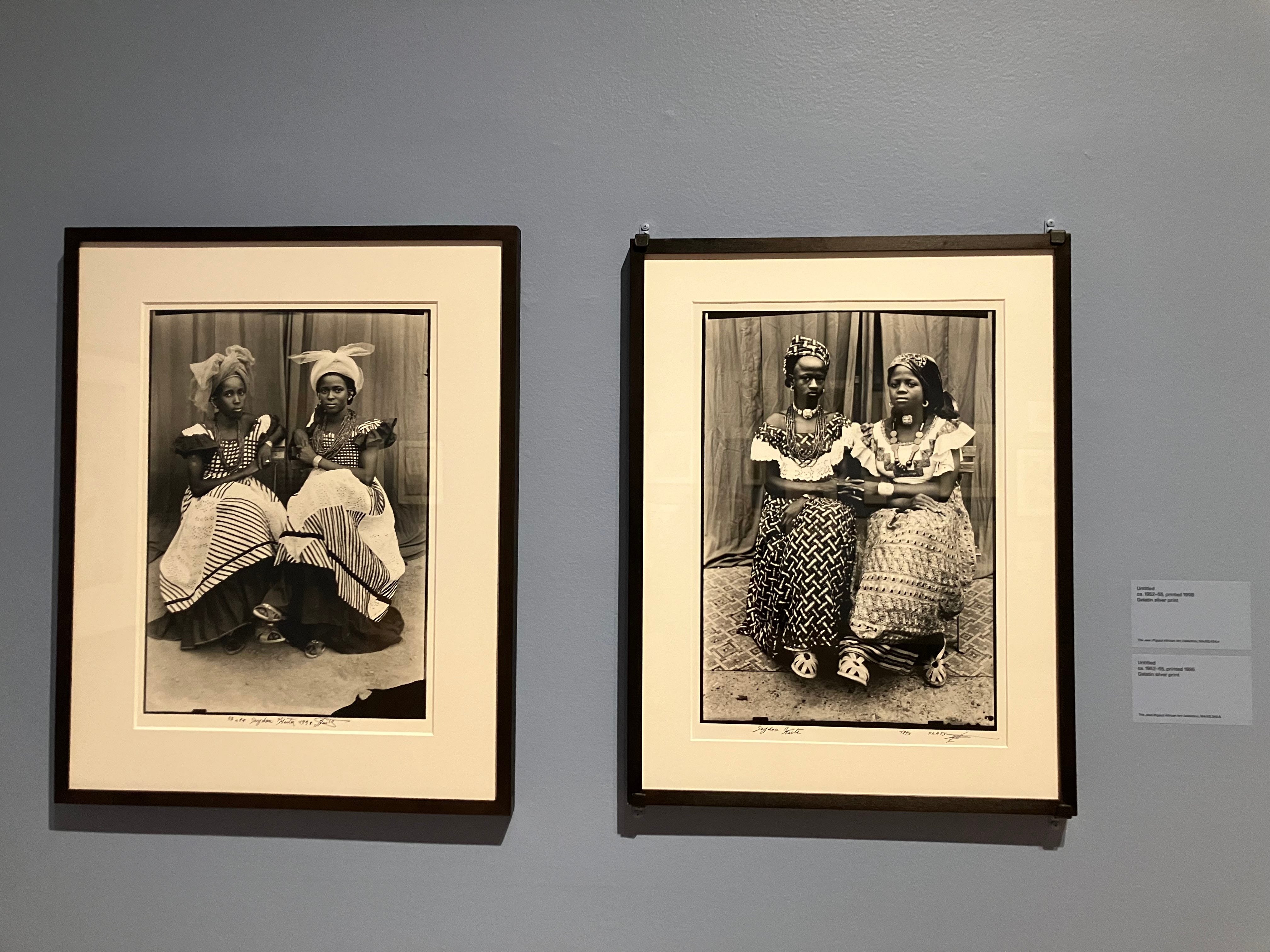
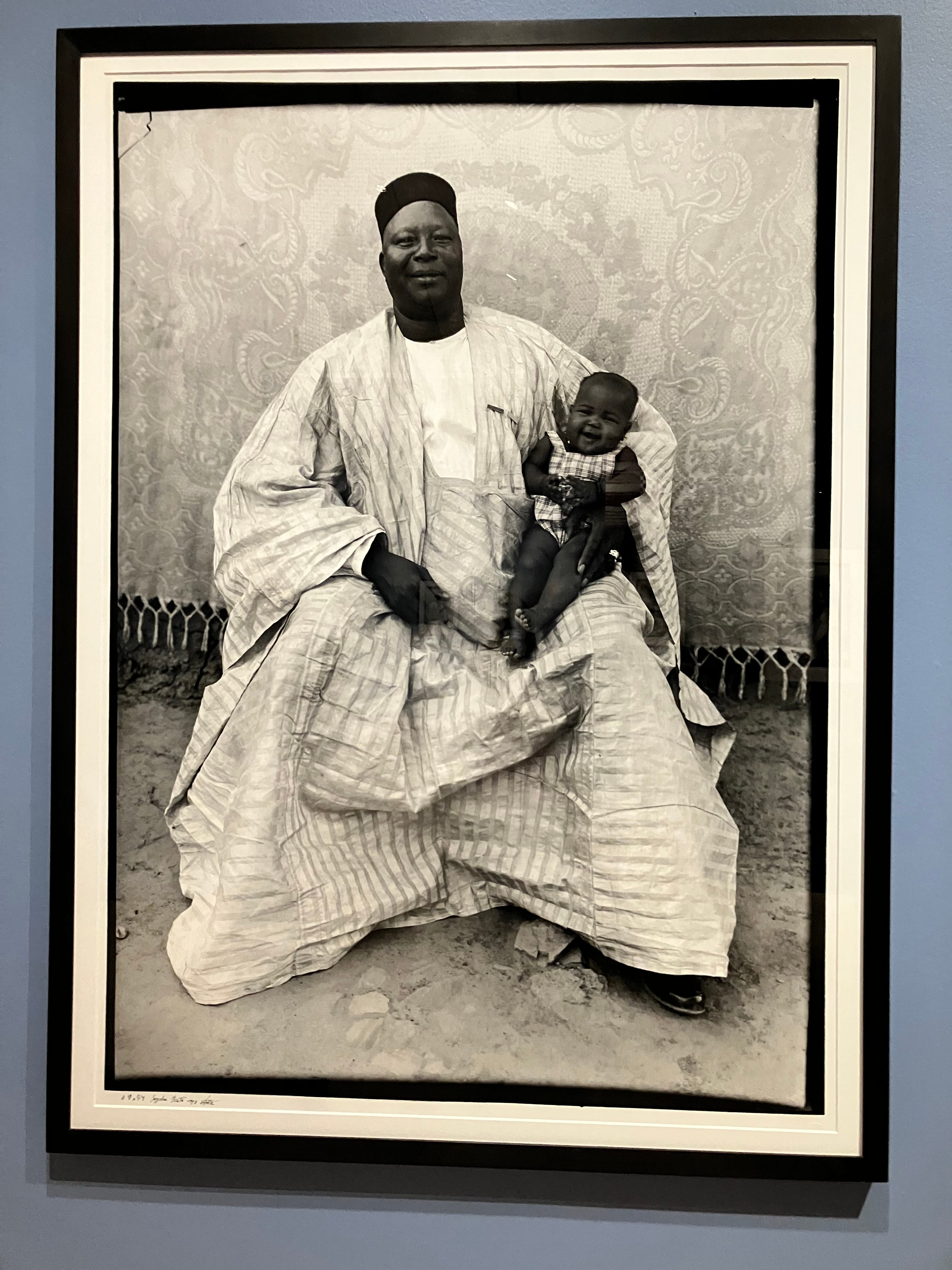
Seydou Keita ran a successful portrait studio in Bamako, in what is now Mali, in the 1950s and 1960s. In this major retrospective at the Brooklyn Museum until May 17 you can see the range of his work, and his ongoing interest in patterns and repetition. Often he pairs two figures together, like these below. Notice how in the photo on the left the dresses are arranged as carefully as the women, so the hem decoration merges into one line, while the stripes intersect it. Sometimes the women paired are friends or sisters, but sometimes they are co-wives. The women look at us but they bond with each other, through gesture, fashion, and symmetry.
The exhibit provided a lot of valuable context, including mannequins draped in Malian textiles. Coincidentally, this month I also read Walter Rodney’s socioeconomic classic How Europe Underdeveloped Africa (1972) and Ngugi wa Thiong’o’s In the House of the Interpreter (2012), a memoir about growing up in colonial Kenya in the 1950s. Both books were helpful in appreciating Keita’s accomplishments. Rodney, a historian, has a wry sense of humor despite his grim subject. About the jockeying of European powers, he writes, “Britain, Holland, and France suggested that they were not at all convinced that Adam had left a will which gave the earth to Portugal and Spain.” If Rodney argues that “to be colonized is to be removed from history, except in the most passive sense,” Keita shows how artists can reinsert colonized subjects into a shared history.
The Jewish Museum, New York
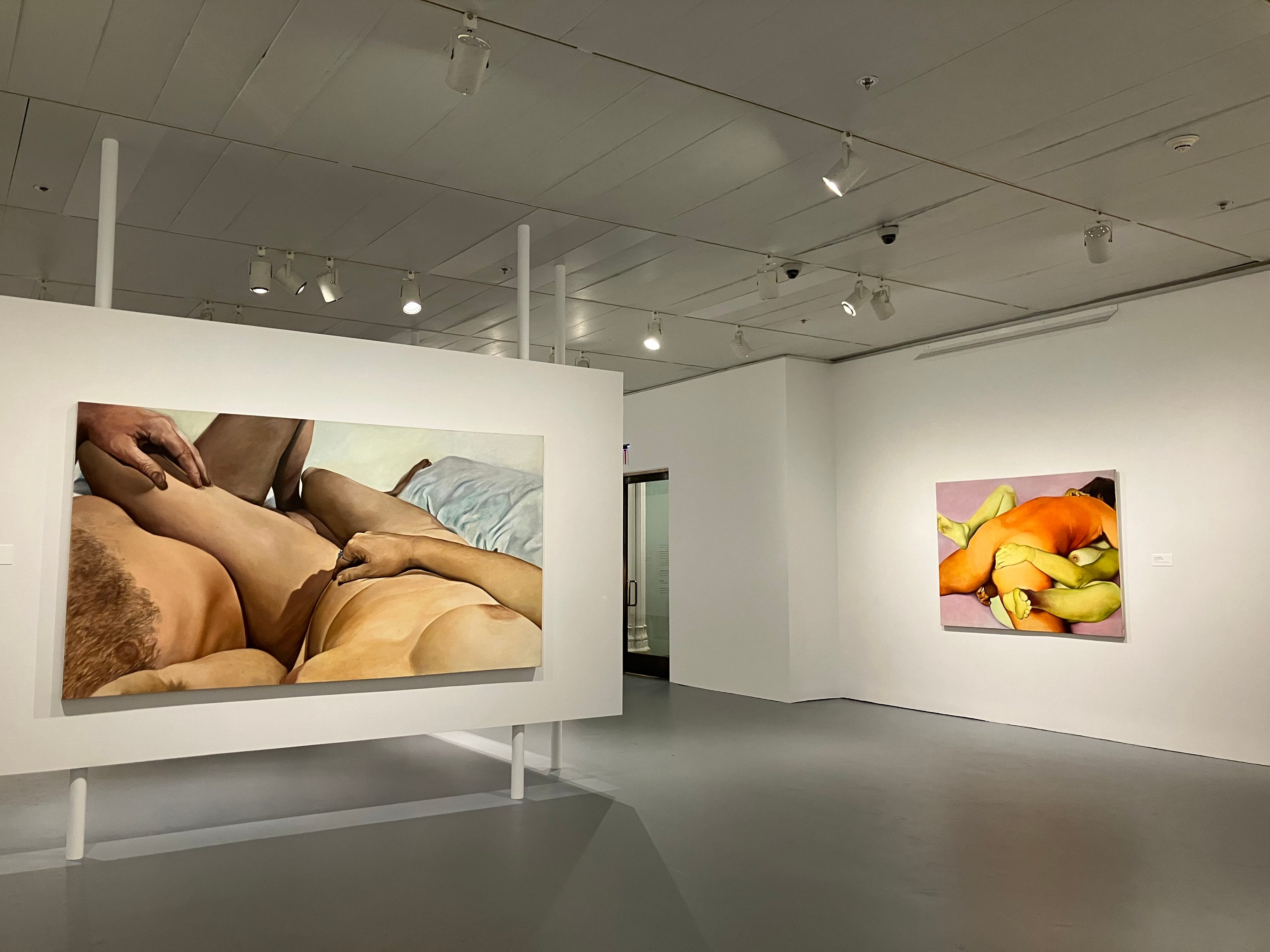
There are more women’s bodies on display at the Jewish Museum until May 31, but these are painted by a woman artist, Joan Semmel. Like the history paintings at the Prado, they are huge, and often include dramatic foreshortening. Called “In the Flesh,” the exhibit emphasizes Semmel’s decades-long project of depicting the naked female body over time. At rest and intertwined, these bodies look both natural and heroic. Without faces or context, the paintings are both intimate and universal. The room was practically empty when I was there, and exhilarating.
The Reina Sofia Museum, Madrid
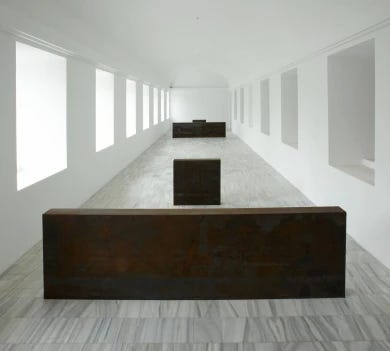
“It’s a funny story…,” I start. I am in my mother’s kitchen with her and one sister, telling them about my recent trip to Madrid. We are talking about artists’ archives. “So there’s a Richard Serra room in the Prado. No, wait. In the Museo de la Reina Sofia, not the Prado. And it’s filled with some of his steel sculptures. Not the huge ones that you walk into, but big enough. Four huge slabs of metal. And there’s a tiny plaque on the wall that says that the museum commissioned the Serra in 1986 but then during some renovation or disruption–I don’t remember–they lost them.”1
My sister and I laugh. How do you lose incredibly large, incredibly valuable sculptures? Our empty dinner plates are still on the table between us. My mother’s kitchen has just enough room for a table pushed against one wall, three chairs, and two large sideboards, stuffed to the gills.
“What?” My mother asks. I repeat myself, adding “The Serra pieces were put in storage, forgotten, then no one could find them.”
My sister and I both smile and shake our heads. It’s astonishing. Our mother smiles too.
“So, anyway, Serra agreed to replicate the lost sculptures and that’s what is in the room now. Copies, but made by the artist himself.”
“Are they copies then? They are originals, really, new works,” my sister says. My mother leans forward, concentrating on us.
“But replacements.”
“Yeah.”
“Funny, right?”
“Wild!”
I love Serra’s work. I love my sisters and my mother. I don’t know why I didn’t love the Reina Sofia museum more. I wanted to.
This post is longer than usual. It took me a whole day to write, and my husband is holding dinner for me. There was a lot to fit in and I still don’t do justice to any of these exhibits or museums or books. Thank you, though, for sticking with me to the end! I look forward to any comments.
I tell this story from memory. The Reina Sofia online entry on this Serra work doesn’t mention it, but this article gives some more detail, including the helpful fact that the work weighed 38 tons.
How absent minded can someone be to lose a Richard Serra?
Thanks for gathering this all into this beautiful little roundup. So many miracles on display! So little time. I would move to Madrid for the Prado alone. And maybe the boquerones.