
Displacements
The twentieth century art world in motion: Wifredo Lam and Peter Selz

I’m late. For this Substack post and on this train to Barcelona, which is running at half speed because of the recent terrible crashes here in Spain. It’s the last day of a tumultuous month and I’m catching up.
I’ve been in Madrid, where I blitzed three museums in three days (more on that later). But I’m also behind on what I’ve seen and read since my last post. I’ll try to tie some of this together with a theme of this moment, now.
Displacement I
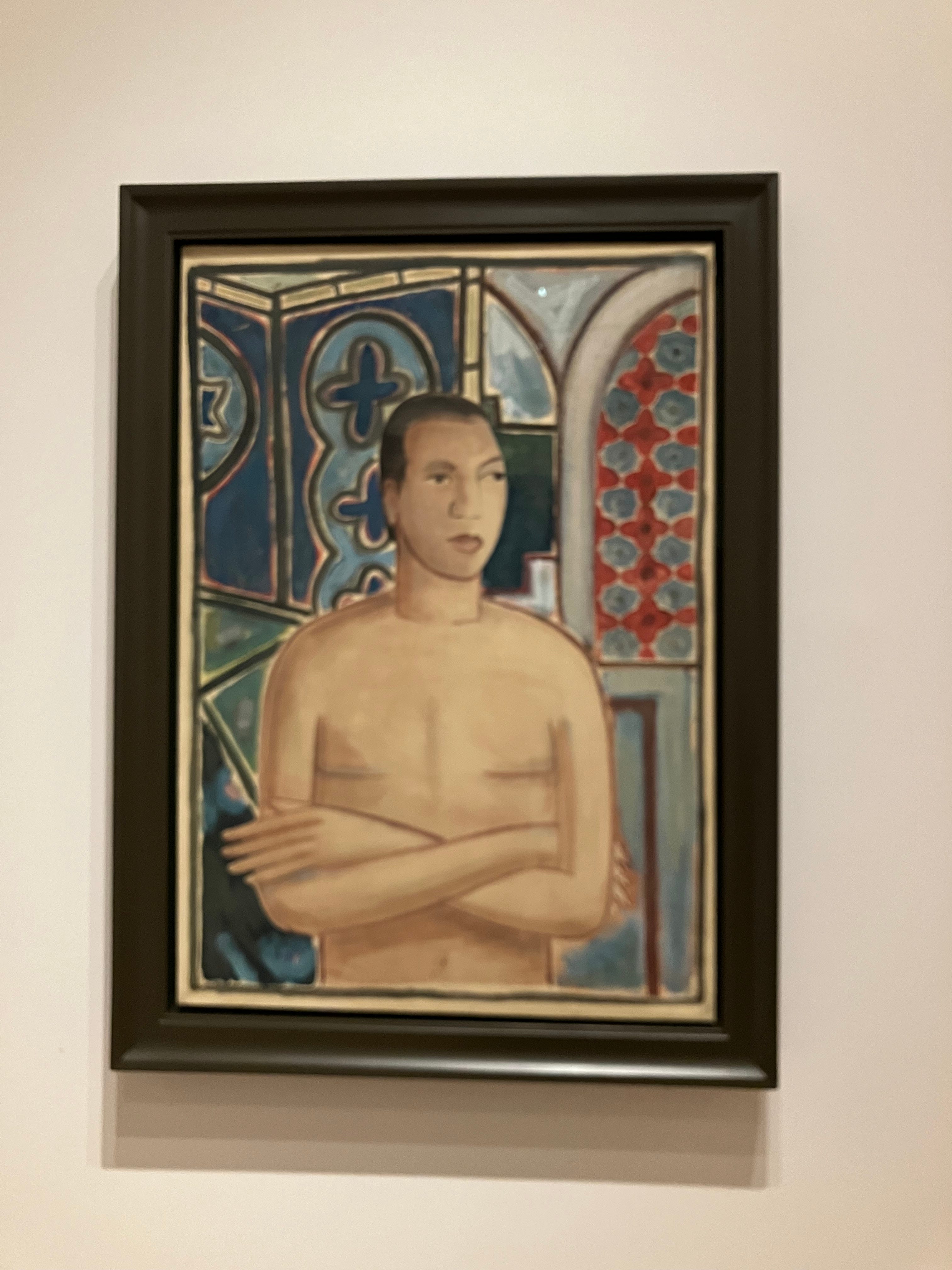
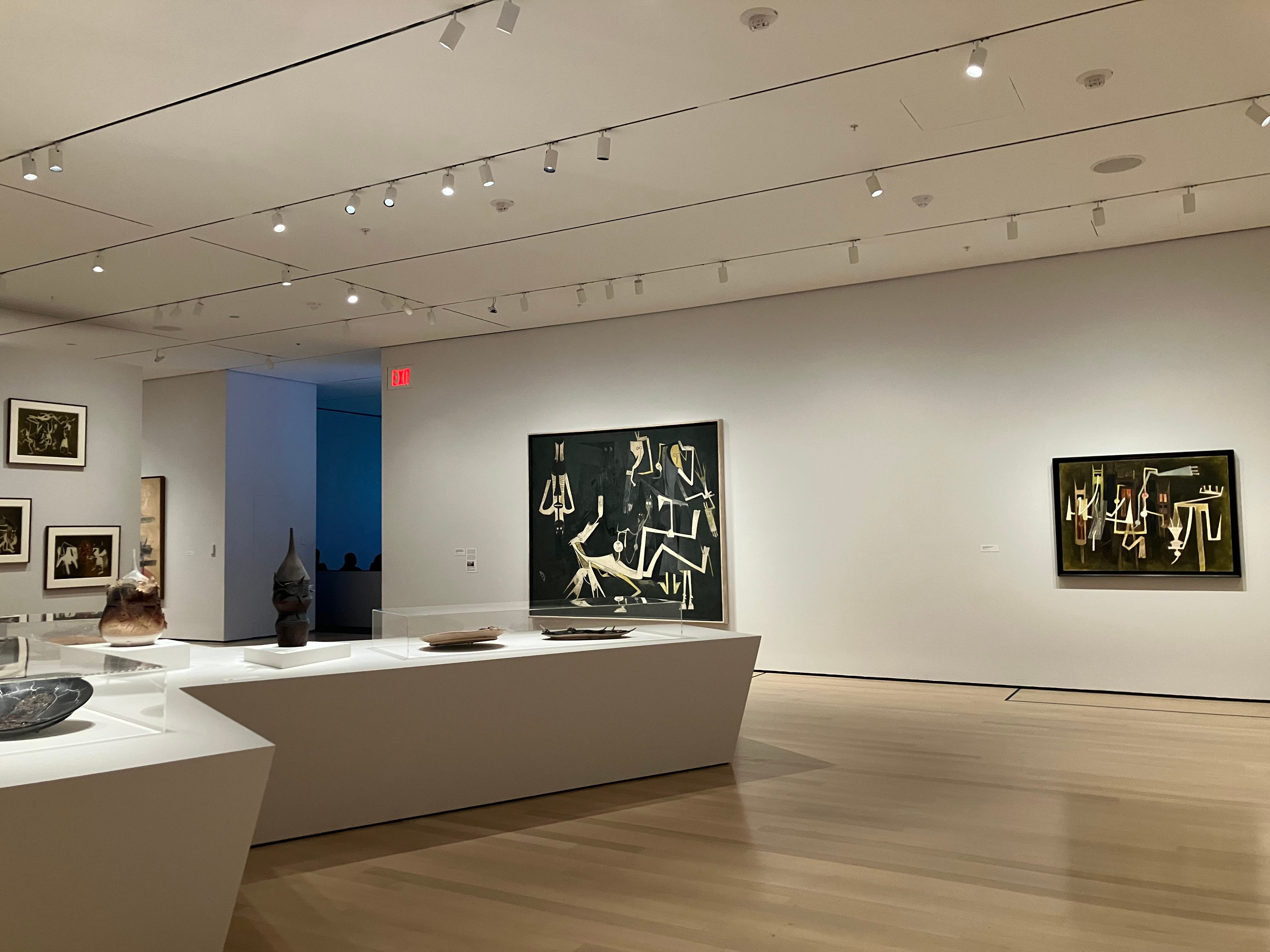
Wifredo Lam1, a Cuban artist of African and Chinese descent, reinvented his work over and over as he moved back and forth across the Atlantic. The retrospective at New York's Museum of Modern Art until April 11 is a wonderful introduction to this under-known cubist-surrealist-expressionist artist of the 20th century. Born in Cuba, Lam studied art in Spain, joined the Civil War there in the 1930s, then fled for Paris, where he met Picasso and Breton, then had to flee Paris under the German occupation, moving to Marseilles with fellow artists, until he was able to get a boat back to the Caribbean, where he worked alongside friends and colleagues like Aimé Cesaire until he eventually had to flee the Cuban Revolution in the 1950s. He spent his last years back in Europe. It was quite a life and quite a career. [As I write this, I am traveling through the low rolling scrub outside Madrid that he defended as a member of the Republican army. Stone walls and hedges outline small farms. Red roofs define towns.]
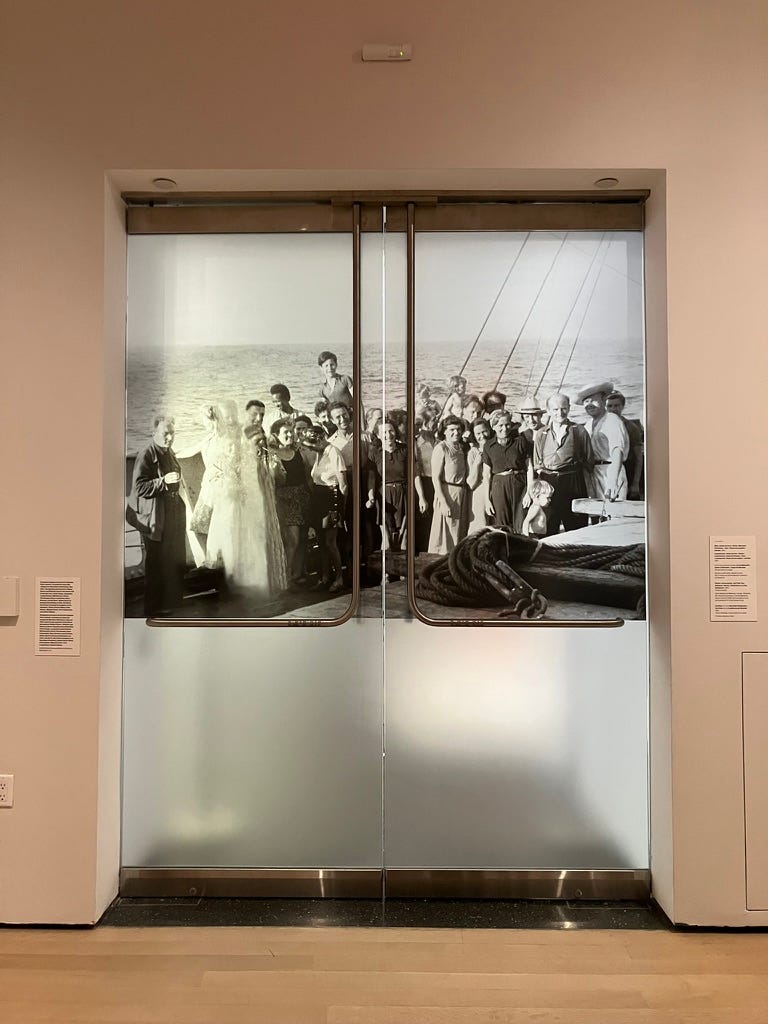
Lam’s work moves between all these points, with an essential gentleness. The biographical wall text makes clear that he adapted wherever he was, and made do. When paint was scarce he diluted it; you can see the drips on the bottom of later canvases. When canvas was hard to find, he painted on muslin. Over time, he incorporated more and more imagery from Caribbean folklore and religions, as well as Cuba’s manigua, or tropical undergrowth.


“I painted relentlessly… so much that my little hotel room was full and I could barely move.”— Wifredo Lam, from wall text of exhibit
Lam overflowed with energy and ideas. He painted, drew, wrote, collaborated, and made ceramics. Somehow, despite the moves and disruptions, much of his work survived. The videos made for the show include scenes shot in his carefully organized archive, now maintained by his son. The son ruefully remembers when his father turned to him and said (I paraphrase), some day all of this will be yours to take care of. How true— and how nice to see this intricate work reaching a larger audience.
Displacement II
On the plane on the way to Europe last week I read one whole book from start to finish. On another transatlantic flight I read Dracula in one gulp. This time it was Gabrielle Selz’s memoir of her father Peter Selz, called Unstill Life: A Memoir of Art and Love in the Age of Abstraction. Gabrielle is an accomplished writer; Peter was an influential curator at MoMA from 1958 to 1965, when my father too was in the New York City art world. I read her account of her father with care and compassion, knowing that the ground could be difficult. She navigated it with a lot of grace— and calm. She loved and admired him, while also seeing him clearly.
“Together they were two riddles that solved each other,” Gabrielle Selz wrote of her parents.
Like Lam, Peter Selz was displaced, and moved over and over. He was born in Munich in 1919 to a Jewish family of optometrists, and fled to New York City as a teenager. He established himself in the art world in part through a distant relationship to Alfred Stieglitz, and educated himself about art while working in German beer factories. After the war, he studied at the University of Chicago during the same years my father was at the School of the Art Institute of Chicago. He wrote a dissertation on German expressionism, took a curatorial job in California, and crisscrossed the country again to take the MoMA position, now trailing a writer wife and two daughters. The Selzes were a formidable pair. “Together they were two riddles that solved each other,” their daughter wrote. She chronicles both their glamorous social life in New York City and their real devotion to art and their artist friends, including Mark Rothko, Alberto Giacometti, and Karel Appel.
Selz spent the last decades of his career in Berkeley as a professor and director of the art museum there. He had divorced Selz’s mother and had three more marriages in California. Unlike Lam, his constant motion seemed more of a personality trait than a circumstance of his life. He was essentially restless— eventually adapting to Pop Art and the happenings of Berkeley’s art scene. Gabrielle’s memoir is sometimes painful to read. She acknowledges that she and her sister came “after the main course: art.” Her mother described Peter as “the small monument in the center of my life.” That was obvious when, for example, the Selzes forgot the infant Gabrielle at an airport in her carrier, hastily disembarking from their plane to retrieve her. Another time, they dropped their young children in a Swiss nursery for two months so they could traverse Europe on their own. Yet Gabrielle loved art too, and learned much from the childhood she was granted. She is a wonderfully descriptive writer about images, and a perceptive critic. She grew up with Rothko, the man and his art, and was devastated by his death. Like Peter Selz, Rothko too was a displaced person.
This is bumpy change-over, but I’ll end here with the one Rothko I saw this week, at the Thyssen-Bornemisza museum. I’ll write more about those Madrid museums soon (I’m so behind!) but this Rothko painting perfectly conveys deep calm while acknowledging tragedy, which feels relevant right now. You can see below that the museum provides a pew-like viewing bench, unlike anything else in the galleries but well suited to contemplating this painting. The detail image shows the vibrations of color (and emotion) that quiver at the edges. The whole view shows the depth and uncanny balance of the composition.


What happens to people who move around constantly? What do they carry with them and what do they leave behind? We have left Zaragoza behind are almost at Barcelona. The terrain is greener now, almost the dark uneven green of that Rothko. If a transatlantic flight was exactly the duration for reading one whole book, this cross-Spain train ride (at half speed!) is exactly the duration for writing one draft post. I’ll reread then send and hope to write more sooner than later.
I hope you are all taking care of yourselves through all the weathers and turmoils. Thoughts welcome in the comments, as usual. Thank you for your presence. Vale, as they say everywhere here, and which still sounds to me like goodbye.
From the many helpful videos in the show (and on the website) I gather that he pronounced his name like Lahm, not Lamb. FYI.
Lam’s story is as fascinating as his art. I enjoyed this train ride with you and am fascinated by how well you managed to write and illustrate this while in motion. The museums of Madrid are a feast, and I wonder what you’ll feature on the menu of your next post.
The lives of artists displaced by WWI and WWII are so fascinating - the way they moved between contrasting (art) worlds; how those experiences shaped their art etc. Looking forward to reading about your stay in Madrid!